
Rodent Exclusion & Sealing in New Hope, MN
Trapping clears out the rodents that are already in. Exclusion is the part that keeps new ones from showing up — sealing every gap we find with steel wool, galvanized hardware cloth, and mortar, materials a rat or mouse can't chew through.
What Actually Keeps Rodents Out?
Not every material that looks like a fix actually holds up. Here's what we use and why, next to the DIY stand-ins that usually fail within a year. A dime-sized gap is enough for a mouse, and a bit more for a bat or squirrel — see our identification guide if you're not sure which one you're sealing out.
| What We Use | Why It Works | Common DIY Mistake |
|---|---|---|
| Steel Wool + Sealant | Rodents can't chew through steel fibers, and sealant locks it in place. | Spray foam alone looks similar but gets chewed through in a season. |
| Galvanized Hardware Cloth (1/4") | A weave tight enough to stop both rats and mice, and it won't rust outdoors. | Chicken wire has gaps wide enough for a mouse to still squeeze through. |
| Concrete Patch & Mortar | Closes foundation cracks and gaps around pipes permanently. | Caulk alone flexes with the seasons and cracks open again within a year. |
| Door Sweeps & Vent Covers | Closes the gap under doors and keeps dryer or roof vents animal-proof without blocking airflow. | A missing or bent vent cover is one of the most common gaps we find on an inspection. |
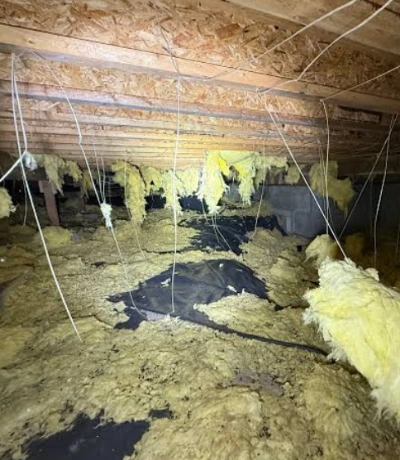 New Hope Foundation
Why Trapping Alone Doesn't Fix a New Hope Home
Trapping clears out what's active right now. It doesn't do anything about the gap that let them in, and that gap doesn't fix itself.
- Cinder block foundations. A lot of New Hope's 1960s ramblers were built on cinder block, and the mortar joints between blocks naturally loosen over 60-plus years, giving rodents a low, easy entry point.
- Frost heave. Minnesota's freeze-thaw cycle shifts soil under a foundation every winter, which can reopen a crack that was sealed with the wrong material the year before.
- Shared buildings. In a New Hope apartment or townhome, one sealed unit doesn't help if the shared wall or utility chase next door is still open.
How We Seal a Home
Inspect Every Zone
Attic, crawl space, foundation line, roofline, and garage, checked for every gap, not just the one you noticed.
Match the Material to the Gap
A foundation crack, a vent opening, and a utility penetration each need a different fix. We don't use one material for everything.
Seal It Permanently
Steel wool, hardware cloth, mortar, or a proper vent cover, installed so it holds through a Minnesota winter, not just until spring.
Verify the Seal Holds
A follow-up check confirms nothing has reopened and no new activity has shown up near the repair.
The Spray Foam Problem
"Spray foam looks like a fix the day you install it. Six months later, it's just soft padding a mouse chews through on its way back in."
We still use foam in a few spots, mainly for small gaps around pipes where a final seal of caulk adds weatherproofing on top of a steel wool or hardware cloth base. What we won't do is use foam by itself as the only barrier on a gap big enough for a rodent, because it simply isn't built to stop something that chews for a living.
What an Exclusion Job Actually Looks Like
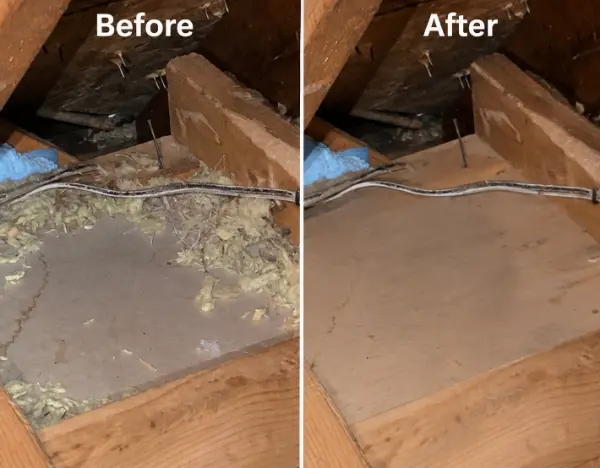
A Rambler With Four Separate Entry Points
A New Hope homeowner had trapped mice on and off for two years without ever closing the gap. The inspection found four separate openings: a cracked mortar joint, a bent dryer vent cover, a gap around a gas line, and a missing door sweep on the garage-to-house door.
Fix: mortar patch on the foundation joint, a new vent cover, steel wool and sealant around the gas line, and a proper door sweep installed. No new activity on the two-week and one-month follow-up checks.
This is an illustrative scenario based on work typical to New Hope's housing stock, not a record of a specific past client.
What Does Rodent Exclusion Cost in New Hope, MN?
Price depends on how many entry points there are and what material each one needs. A single vent cover costs a lot less than a full foundation seal with multiple gaps.
| Service | Typical Price | What's Included |
|---|---|---|
| Single Entry Point Seal | $150 – $350 | One confirmed gap sealed with the right material for that spot. |
| Multi-Point Exclusion | $400 – $900 | Several entry points sealed in one visit, common after an inspection finds more than one gap. |
| Full Exterior Exclusion | $500 – $2,500+ | Sealing across the whole foundation, roofline, and vents for a long-term fix. Severe or hard-to-access cases can run higher. |
Pricing varies by home, access, and severity — these are starting ranges, confirmed when you book, not a quote. See the full New Hope pricing breakdown for mouse and rat removal costs too.
Exclusion & Sealing Questions
Why doesn't spray foam work to keep rodents out?
Foam cures soft enough for a rodent to chew through within months. It works fine as a finishing layer over steel wool or hardware cloth, but it's not a barrier on its own.
How long does exclusion work actually take?
A single entry point usually takes under an hour. A full exterior exclusion with multiple gaps can run most of a day, depending on how many spots need sealing.
Will sealing gaps trap rodents inside my house?
No. We always trap or confirm no remaining activity before sealing the last exit point, so nothing gets sealed in with no way out.
Does exclusion work on older New Hope homes with cinder block foundations?
Yes, though cinder block usually needs mortar patching rather than just caulk, since the joints between blocks are what tends to open up over time.
Do you guarantee the seal will hold?
We stand behind the materials and the work. Ask us about our current guarantee terms when you book, since coverage can depend on the type of repair.
Can I do exclusion myself with steel wool from the hardware store?
For a single small, accessible gap, yes, that's a reasonable DIY fix. The harder part is finding every gap in the first place, which is where most DIY attempts fall short.
Exclusion & Sealing Service Area
Based in New Hope (ZIP codes 55427 and 55428), with regular exclusion calls into these surrounding communities: