
Mouse Removal in New Hope, MN
Rodent Solutions finds the gap a mouse is actually using, not just where you're hearing it, clears out the nest, and seals the opening with something a mouse can't chew through. We work on homes, kitchens, attics, and rental units across New Hope and the west metro.
How Do You Know It's Mice?
Mice are quieter than rats and leave smaller evidence. These are the five things that usually tip us off first:
House mice are small, gray-brown, and curious — unlike rats, they'll often investigate a new trap within a day or two instead of avoiding it. Not sure it's a mouse and not a vole or young rat? Check our identification guide.
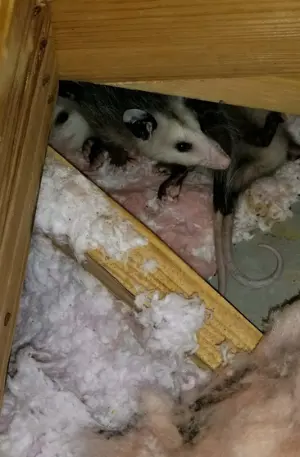 New Hope Attic
Why Does New Hope Get So Many Mice?
A mouse only needs a gap the width of a pencil to get inside, and New Hope's housing stock hands them plenty of those:
- Original construction gaps. Homes built during the city's big growth years in the 1950s and 60s often still have their original dryer vents, sill plates, and utility penetrations — decades of settling and freeze-thaw cycling have widened the small gaps mice use most.
- Shared walls in rentals. New Hope runs close to an even split between owner-occupied and rental housing. In an apartment or townhome, a mouse problem in one kitchen can travel through a shared wall void to the unit next door.
- Cold-weather car nesting. When temperatures drop, mice look for any warm, enclosed space — including a car engine bay. It's a surprisingly common call for homes without an attached garage near Northwood Park's tree line.
Why One Mouse Never Stays One Mouse
That's why we treat every mouse call as an entry-point problem first, not just a trapping problem — trap without sealing, and the math above just keeps going.
What a Mouse Problem Actually Costs You
Mice don't need to chew through much to cause real damage. Here's what shows up most in New Hope homes:
-
Chewed wiring in walls and cars.
Mice gnaw insulation off wiring to keep their teeth worn down, which is a real fire and electrical-repair risk in both attics and parked vehicles. See our full property damage & fire risk guide for more.
-
Compacted attic insulation.
Nesting material packed into insulation reduces how well it holds heat, which shows up as a less efficient attic over a Minnesota winter.
-
Contaminated pantry food.
Mice will chew into cereal boxes, bread bags, and pet food storage — anything not in a hard, sealed container is fair game.
What a Mouse Job Actually Looks Like
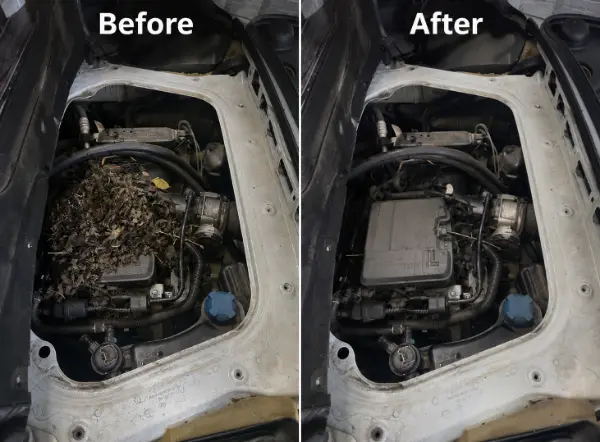
Mice Nesting Under a Car Hood in January
A New Hope homeowner without a garage noticed a strange smell and chewed wiring under the hood after a cold snap. No mice were active inside the house.
We found the air filter housing packed with shredded insulation and confirmed mouse nesting, not rat activity, based on the dropping size. Fix: nesting material cleared, mouse-deterrent tape applied around common engine-bay entry points, and interior traps set near the garage wall as a precaution.
This is an illustrative scenario based on work typical to New Hope's winters, not a record of a specific past client.
How We Get Rid of Mice
Find the Gap
We check kitchens, baseboards, utility penetrations, and the attic and garage line for anything dime-sized or smaller that a mouse could be using — see our house mouse behavior guide for why that size matters so much.
Clear the Nest
Active nesting material gets removed and the area gets a check for droppings and contamination before anything gets sealed.
Trap What's Active
Snap traps go on the travel path we found, not scattered randomly, and get checked on a schedule.
Seal It Shut
The entry point gets closed with steel wool or galvanized hardware cloth — materials a mouse can't chew through — so the fix actually holds.
Health Risks Mice Carry
"Most of the risk isn't the mouse itself — it's what gets left behind in a space you don't open very often."
What Mice Can Expose You To
- Hantavirus — spread through dust from dried droppings and urine, mainly in enclosed spaces like sheds and attics.
- Salmonella — spread through contact with droppings, especially in a kitchen or pantry.
- Allergy and asthma triggers — mouse dander and droppings can worsen symptoms for sensitive household members.
How We Keep It Safe
- Gloves and a proper mask before disturbing any nesting material or droppings.
- No loose bait in homes with pets or small kids — enclosed stations only, when bait is part of the plan.
- A trap-and-seal-only option if you'd rather skip rodenticide altogether.
What Does Mouse Removal Cost in New Hope, MN?
Price depends on how many entry points there are, how hard they are to reach, and whether it's a single kitchen gap or a multi-unit building with shared walls.
| Service | Typical Price | What's Included |
|---|---|---|
| Mouse Trapping Only | $150 – $250 | Inspection, trap placement along active travel paths, and follow-up checks until activity stops. |
| Trapping + Exclusion | $250 – $400 | Trapping plus sealing the specific gap or gaps the mice were using, so new ones don't find the same opening. |
| Full Exterior Exclusion | $500 – $2,500+ | Sealing across the whole foundation, roofline, and vents for a long-term fix. Severe or hard-to-access cases can run higher. |
See the full New Hope pricing breakdown for rat and exclusion costs too.
Pricing varies by home, access, and severity — these are starting ranges, not a quote.
Mouse Removal Questions
How do mice end up nesting in a car engine during winter?
A parked car gives off leftover heat and the engine bay is enclosed, which makes it an easy winter shelter. Mice often get in through the air intake or around the wheel wells, then build a nest near the air filter housing.
Can one mouse really turn into dozens that fast?
Yes, if the entry point stays open. A female mouse can have a new litter roughly every three weeks, so a single gap left unsealed can go from "one mouse" to a real infestation in a season. See our FAQ on the 5-day mouse rule for how fast that actually plays out.
Why do glue traps have such a bad reputation?
Glue traps don't kill quickly, which means a trapped mouse can suffer for a long time before it dies. We use snap traps and enclosed bait stations instead, which are faster and more humane.
Do mice chew through plastic storage bins?
Yes, if there's food or nesting material value inside. Plastic bins slow mice down more than cardboard, but they're not mouse-proof on their own.
What's that musty smell in my pantry?
A musky odor in a cabinet or pantry is often mouse urine, especially if it's paired with small droppings or chewed packaging. It's usually one of the first signs homeowners notice before they see an actual mouse.
Can a newer New Hope townhome get mice too, not just older houses?
Yes. Newer construction has fewer original gaps, but shared walls, garage openings, and utility penetrations still give mice a way in — especially in a connected townhome or multi-unit building.
Mouse Removal Service Area
Based in New Hope (ZIP codes 55427 and 55428), with regular mouse removal calls into these surrounding communities: